
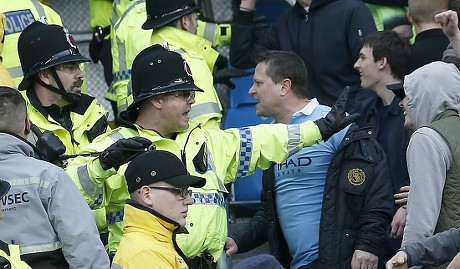
A Manchester City fan was badly injured as he suffered a fractured leg following attack in a home stand during the club’s Premier League meeting with Leeds United. It prompts an ongoing police investigation and growing concerns from fan groups about matchday safety at the Etihad Stadium.
Greater Manchester Police confirmed that five people were arrested on suspicion of affray after violent disturbances broke out on Saturday.
Officers said enquiries remain active, with the force working closely with Manchester City to establish the circumstances behind the incident.
The flashpoint unfolded on a day when more than 3,000 Leeds United supporters made the relatively short journey along the M62, with many situated in the designated away end.
However, as is allowed under Manchester City’s current policy, some Leeds fans had also purchased seats in hospitality areas such as the Tunnel Club and the 93:20 lounge — a system that welcomes supporters of either club so long as they follow stadium rules.
The arrangement created a tense and emotionally charged atmosphere throughout much of the match, intensified by the drama on the pitch.
Leeds mounted a spirited second-half comeback from 2-0 down, only for Phil Foden to strike a late winner for City.
That dramatic swing appears to have contributed to heightened tempers within certain sections of the ground.
Dispute over severity of injuries sparks fan backlash
Initial reports circulating online suggested that a City fan was badly injured and suffered a double leg fracture after being attacked by Leeds supporters who had gained access to the home end.
The club moved quickly to respond, issuing a public statement via Man City Fan Support on X to address what it described as misinformation.
“We are aware of an incident that took place at the Etihad Stadium yesterday between a group of fans,” the statement read.
“From the information that has been provided to the club by the relevant authorities and through internal investigations, we can confirm that this incident did not involved Leeds fans and that the injuries were nowhere near as serious as the inaccurate rumours which have circulated online.
“This matter is subject to an ongoing police investigation.”
The message, intended to calm speculation, instead triggered a wave of criticism from supporters who insisted that the injuries were, in fact, severe.
Within hours, nine recognised Manchester City supporter groups — including the Official Supporters Group and City Matters, the club’s formal fan consultation board — signed a strongly worded letter challenging the club’s version of events.
Their joint statement referenced a “brutal attack” that had resulted in a fractured tibia, urging the club to launch a thorough review into how such an incident was allowed to occur within a home section of the stadium.
According to those groups, the fan in question required hospital treatment and is facing a lengthy recovery.
- Man City take final decision, refuse to release player for early AFCON camp
- Crystal Palace set to sign Man City talented attacker to replace Jean-Philippe Mateta
The letter also made specific reference to the club’s upcoming home fixture against Galatasaray in January, outlining concerns that the same ticketing policies could again allow opposition supporters to slip into home areas.
“We note that in January the club are scheduled to play Galatasaray at home, a club with previous history of obtaining tickets in the home end.
“We ask the club to urgently review the ticket for this game in particular with a view to ensuring the safety of all fans attending.”
Calls for ticketing review as enquiries continue
The Manchester Evening News later confirmed that a Manchester City fan was badly injured and indeed sustained a broken leg, despite earlier claims that the injuries were overstated.
Both the club and Greater Manchester Police are continuing their investigations, and no definitive explanation has yet been given as to how the altercation started or who was responsible.
The dispute has placed fresh scrutiny on Manchester City’s hospitality policy, which is among the more relaxed in the Premier League.