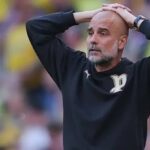
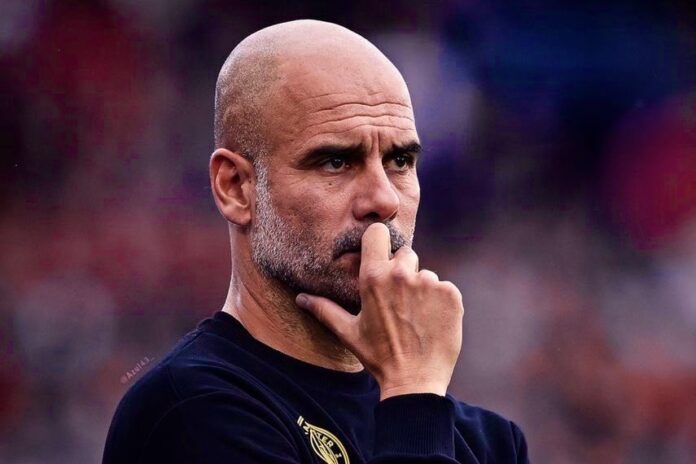
When the final whistle sounds at the Etihad Stadium on Sunday, it will not simply mark the end of another Premier League campaign for Pep Guardiola and Manchester City. It will also signal the closing chapter of one of the most influential managerial eras English football has witnessed.
City’s meeting with Aston Villa will carry enormous emotional weight as Guardiola prepares to oversee his 593rd game in charge of the club, moving beyond the total set by former manager Les McDowall more than six decades ago.
The landmark is another extraordinary addition to Guardiola’s glittering spell in Manchester, where trophies, records and unforgettable football have become synonymous with his reign.
Over the course of a decade at City, the Spaniard has transformed the club into one of the dominant forces in world football, collecting 20 major honours and redefining expectations both domestically and in Europe.
Sunday’s occasion, however, will be about more than statistics alone. Supporters inside the Etihad are expected to deliver an emotional tribute to a manager who changed the course of the club’s history and elevated City to unprecedented heights.
Although Guardiola will surpass McDowall’s appearance tally, the comparison between the two managers reflects very different periods in football history.
McDowall managed City from 1950 until 1963, during an era in which the club struggled for consistency and silverware.
The demands of modern football, with expanded domestic and continental competitions, mean Guardiola has reached the milestone in fewer years despite the heavier schedule.
Even so, McDowall’s contribution remains deeply significant within City folklore.
Born in India, he dedicated much of his life to the club as both player and manager, spending roughly a quarter of a century associated with City aside from a brief spell away at Wrexham.
His time in charge was characterised less by domination and more by resilience, as he attempted to steady the club during difficult years.
His win percentage of 37.16 underlines the challenges City faced during that period, with resources and expectations vastly different from those enjoyed by the modern side.
Yet longevity alone ensured McDowall’s name remained etched into the club’s history for generations.
Guardiola’s achievements, by contrast, have rewritten virtually every modern benchmark. His City side have combined relentless success with an attacking style that has earned admiration across Europe.
The numbers behind his tenure are staggering: more than 1,400 goals scored, an average exceeding two goals per game and a defensive record conceding fewer than one goal on average each match.
Most striking of all is Guardiola’s win percentage. At 70.3%, it places him comfortably ahead of every other permanent City manager.
Former title-winning bosses Manuel Pellegrini and Roberto Mancini both enjoyed hugely successful periods at the Etihad, yet neither came close to matching Guardiola’s consistency across such a sustained period.
There have been brief managerial spells with impressive records, including Sam Cowan, who posted a notable success rate during a short campaign in the late 1940s.
However, Guardiola’s achievement stands apart because it has been maintained across hundreds of matches while competing on multiple fronts every season.
A decade that transformed Manchester City
When Guardiola arrived in Manchester in 2016 following trophy-laden spells with FC Barcelona and Bayern Munich, expectations were already enormous.
City’s owners believed they were appointing the coach capable of turning domestic success into sustained global dominance. What followed exceeded even the loftiest ambitions.
Under Guardiola, City became the standard-bearers of English football. Premier League titles arrived in rapid succession, accompanied by domestic cups and, ultimately, European glory.
His tactical innovations, positional play and relentless pursuit of perfection reshaped the identity of the team.
Guardiola’s City were not simply winning matches; they were overwhelming opponents with control, precision and intensity.
- Not for £500m! Pep Guardiola reveals the only player Man City must never sell
- Top six players who may never play for Man City again after Aston Villa
The emotional connection between Guardiola and the supporters has also deepened over time.
Initially viewed as a globally renowned coach arriving to continue a wealthy club’s rise, he gradually became a central figure in City’s modern identity.
The relationship was strengthened by historic triumphs, dramatic title races and memorable European nights.
Sunday’s farewell is therefore expected to be highly charged. Fans will have one final opportunity inside the Etihad to celebrate the manager who delivered the most successful era in the club’s history.
The tributes will continue beyond the match, with Guardiola also set to be honoured during Monday’s trophy parade and the After Party event at Co-op Live.