
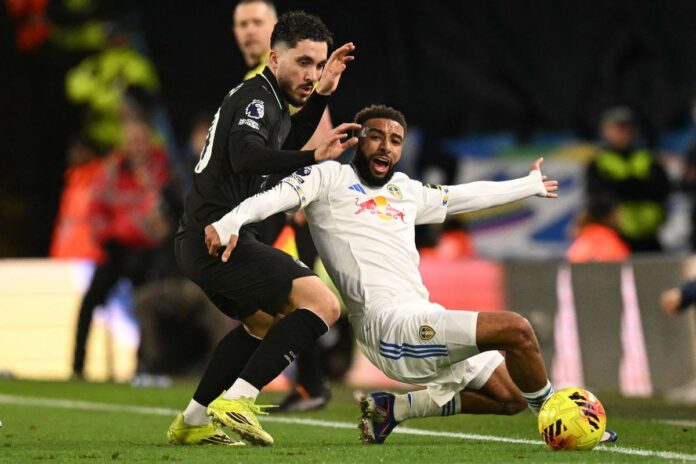
Leeds United were left angered and deflated after slipping to a 1-0 defeat by Manchester City at Elland Road, in a contest overshadowed by a contentious Video Assistant Referee decision.
Daniel Farke’s side produced an energetic and purposeful display for much of the opening period, unsettling the visitors with relentless pressing and sharper attacking intent.
For long spells before the interval, it was Leeds who dictated the tempo, forcing City into hurried clearances and carving out the clearer chances.
The home crowd sensed an opportunity. Leeds looked the more likely to score, but their inability to convert promising moments proved costly.
Against the run of that early momentum, City made their quality count. Winger Antoine Semenyo struck late in the first half, finishing clinically to hand the Sky Blues the advantage.
That goal ultimately settled the contest, but the closing stages were dominated not by footballing finesse, but by fury.
Leeds believed they had a strong case for a penalty after what appeared to be a clear handball inside the Manchester City penalty area.
Appeals from players and supporters were immediate and emphatic, yet referee Peter Bankes waved play on. The decision was checked by VAR, but no review at the pitchside monitor followed.
As frustration boiled over, Farke made his feelings known in the technical area. Following the final whistle, the Leeds head coach was shown a red card for his protests towards referee Peter Bankes, compounding what had already been a deeply exasperating night for the West Yorkshire club.
For supporters who had watched their team outplay City for significant periods, the manner of the defeat stung as much as the result itself.
Premier League explanation adds to anger
In the aftermath, clarification arrived — but it did little to ease tempers.
According to the Yorkshire Evening Post, the Premier League has issued an explanation for not awarding a spot-kick to Leeds on Saturday night.
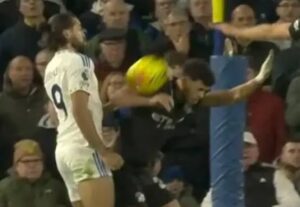
The league’s position centred on the interpretation of handball law, with VAR officials ruling that the City player’s arm was in what they deemed a natural position.
As a result, there was considered to be no clear and obvious error, and therefore no reason to advise Bankes to consult the pitchside monitor for a second look. The on-field decision stood, and Leeds were denied what they felt was a decisive opportunity to level the match.
- Haaland, Gvardiol, Kovacic: Man City injury and return date ahead of Nottingham Forest clash
- Guardiola blasts fans over the ‘Unfortunate’ incident against Leeds United
The explanation has done little to placate those inside Elland Road, where the incident was viewed as a straightforward infringement. From the stands and the dugout alike, the feeling was that the threshold for intervention had been applied too rigidly.
Adding to the controversy was another flashpoint involving Ilia Gruev. Both VAR and Bankes also missed Ilia Gruev getting stamped on, which should have been a straight red to the Manchester City player.
That moment further fuelled the perception among the home side that key decisions had gone against them.
In the cold light of day, the Premier League’s explanation provides procedural clarity. Yet for Leeds supporters, it is unlikely to dull the memory of a night when they felt a crucial decision slipped through the cracks..